10 Signs of Dehydration in Elderly People: What to Look For

The cup of tea beside your dad's chair is still full when you visit in the afternoon. He says he isn't thirsty, but when he gets up, he feels light-headed. Perhaps your mum has been sleeping more than usual and you have noticed she is drinking less. It is not always obvious whether these changes are connected, or whether something else is wrong.
Signs of dehydration in elderly people can include passing less urine, dizziness, a dry mouth, unusual tiredness and, in serious cases, confusion or rapid breathing.
But these symptoms can have other causes, and no single sign reliably confirms dehydration in an older adult. This guide explains ten changes worth noticing, when to get medical help and how to make regular drinks easier at home.
Important: If someone becomes suddenly confused, is very difficult to wake or has severe breathing difficulty, call 999. Do not assume dehydration is the only possible cause.
Why Are Elderly People More at Risk of Dehydration?
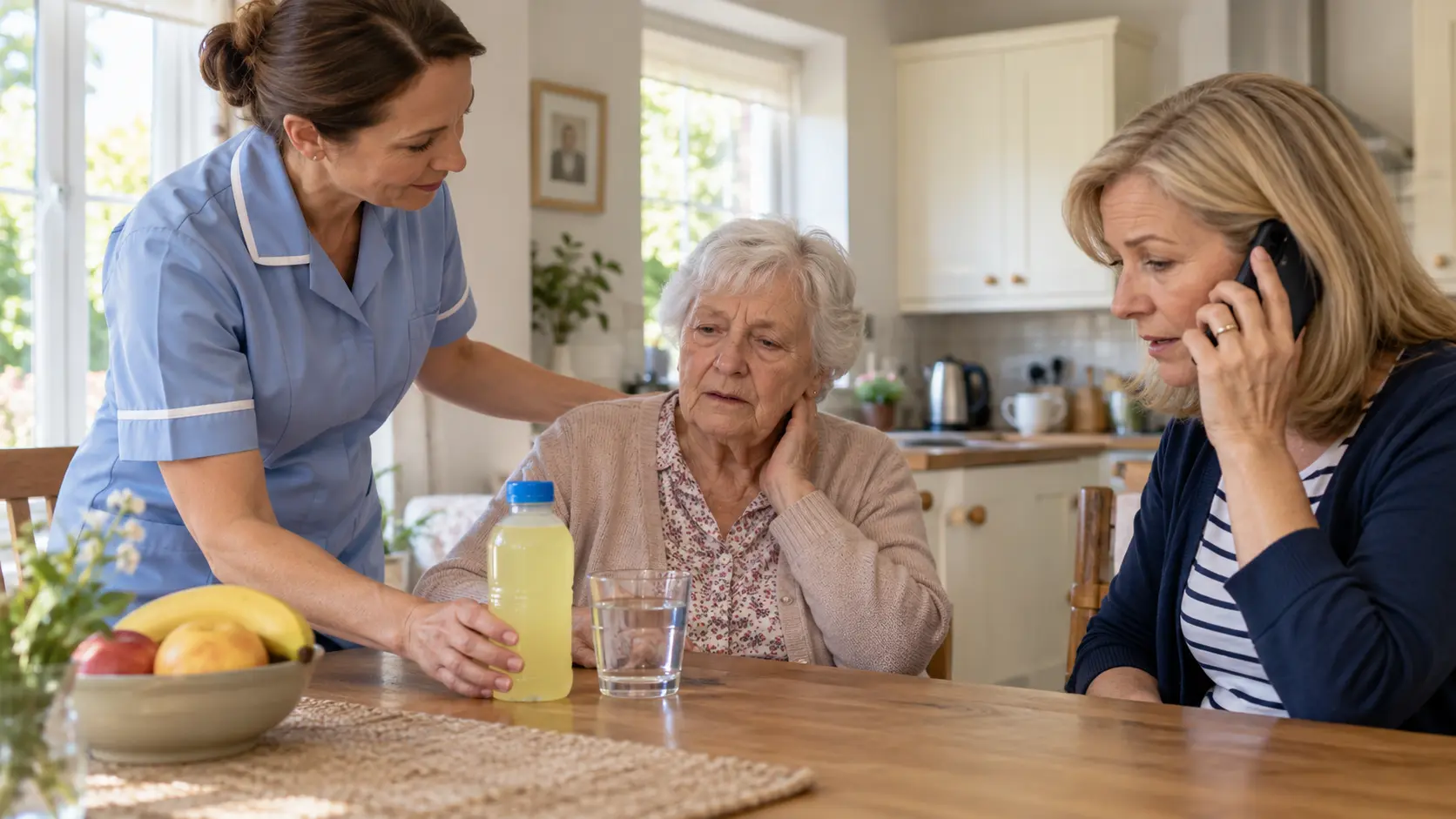
Dehydration happens when the body loses more fluid than it takes in. Older adults may not recognise thirst as readily as they once did. Some also find it difficult to reach or hold a drink, while others deliberately drink less because they worry about reaching the toilet in time.
Illness can increase the risk. Vomiting, diarrhoea, fever and hot weather may cause extra fluid loss. Medicines that increase urination, such as some diuretics, can also matter. People with swallowing difficulties or those who rely on somebody else to offer drinks may need more support.
Age alone does not mean a person is dehydrated. Pay attention to their usual drinking habits, health and recent changes.
10 Signs of Dehydration in Elderly People
These signs are not a diagnostic test. Medicines and other health conditions can cause similar symptoms. A clinician may need to assess the person and arrange tests.
1. Dark Yellow or Strong-Smelling Urine
Urine that looks darker or smells stronger than usual may suggest someone has not been drinking enough. You may notice this when helping a relative use the toilet.
However, urine colour alone is an unreliable measure of hydration in older adults. Medicines, foods and medical conditions can change its appearance too. Consider it alongside drinking habits and other symptoms, not as proof of dehydration.
2. Passing Urine Less Often Than Usual
Someone who usually goes to the toilet regularly may suddenly pass much less urine. This can happen when the body conserves fluid, but kidney or urinary problems may also be responsible.
Pay attention to a clear change from the person's normal pattern. If they are passing very little urine, especially while feeling unwell or dizzy, seek urgent medical advice rather than simply encouraging more drinks and waiting.
3. A Dry Mouth, Lips or Tongue
An older person may complain that their mouth feels sticky, their lips are dry or their tongue feels uncomfortable.
A dry mouth can occur with dehydration, but it can also be caused by medication, mouth breathing and other conditions. Do not rely on it as a hydration check. If it persists or makes eating difficult, ask a pharmacist, dentist or GP for advice.
4. Feeling More Thirsty Than Normal
An older relative may suddenly ask for water more often or say that they feel particularly thirsty. That can be a clue, particularly after illness, exercise or time spent in a warm room.
But not feeling thirsty does not prove adequate hydration. Thirst can weaken with age, so offer drinks regularly rather than waiting to be asked.
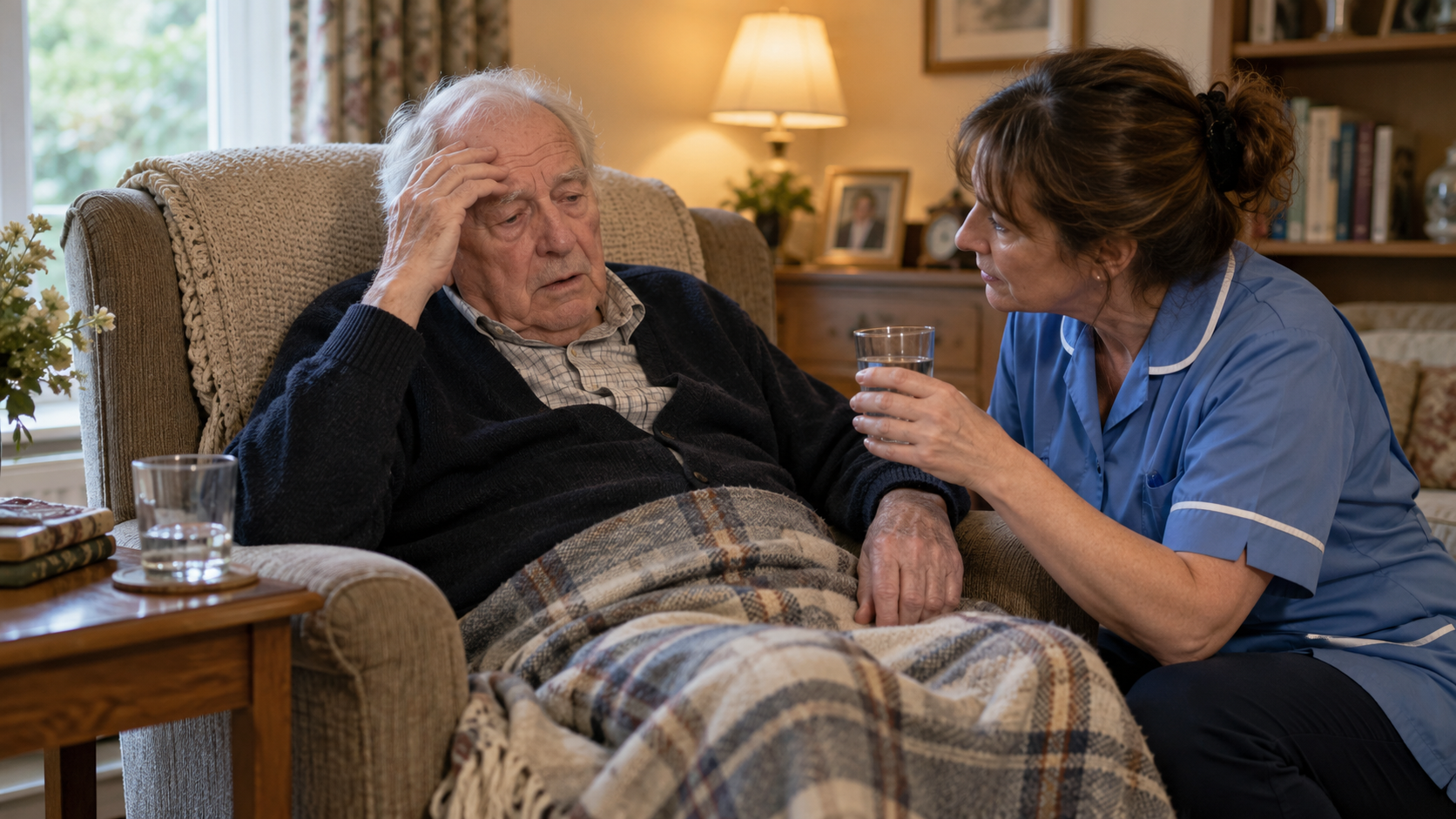
5. Dizziness or Light-Headedness
Someone may feel faint or unsteady when standing. Dehydration is one possible cause, but dizziness can also be related to medicines, blood pressure changes, heart problems and other illnesses.
Encourage them to sit safely and avoid walking without assistance if they feel faint. Dizziness that persists after standing requires urgent medical advice. If they collapse or cannot be roused, call 999.
6. Headaches That Are Unusual for Them
Dehydration may cause a headache or a general feeling of being unwell.
Headaches have many causes, so it is important not to label every headache as dehydration. A sudden, extremely severe headache, or one with new neurological symptoms, needs emergency assessment. For a milder but persistent or unusual headache, seek medical advice, particularly if there are other changes in health.
7. Unusual Tiredness or Weakness
Someone who normally enjoys a walk may suddenly lack the energy. Dehydration can be associated with fatigue and weakness.
Tiredness can also be caused by infection, anaemia, medicines or other conditions. If it is marked, worsening or accompanied by reduced urination or dizziness, arrange prompt medical advice.
Sunken-looking eyes appear on general dehydration symptom lists. This may be noticed during an illness.
This is not a reliable way to diagnose dehydration in an older adult. Normal ageing and weight changes affect appearance. Do not assess hydration from the eyes alone.
8. Eyes That Appear More Sunken Than Usual
9. New Confusion or Disorientation
An older person may suddenly struggle to follow a conversation, seem unsure where they are or behave very differently from normal. Dehydration can contribute to confusion, but infections, medicine effects, stroke and other serious conditions can also cause it.
Sudden confusion is an emergency. Call 999 for immediate assessment. Do not assume it is simply ageing, dementia or a lack of water. Even if the person has an existing memory condition, a sudden change from their usual behaviour needs urgent attention.
10. An Unusually Fast Heartbeat or Rapid Breathing
A racing heartbeat or quicker breathing can occur with serious dehydration, but may also signal other urgent medical problems. These changes deserve prompt assessment, especially if the person is also faint, passing little urine or becoming increasingly unwell.
Seek urgent GP advice or call NHS 24 on 111 in Scotland for fast breathing or a fast heartbeat. If breathing is severely difficult, the person becomes confused or hard to wake, or their skin looks unusually pale, blue, grey or blotchy, call 999.
How Can You Tell if an Elderly Person Is Dehydrated?
You cannot reliably confirm dehydration at home by looking at urine colour, checking the mouth or asking whether someone feels thirsty. The British Dietetic Association's guidance on hydration in older adults explains why familiar signs are particularly unreliable in this age group.
A more useful approach is to notice changes and share them with a healthcare professional. Consider whether the person has:
- Been drinking noticeably less than normal.
- Had vomiting, diarrhoea, fever or a recent illness.
- Passed much less urine or developed new dizziness or fatigue.
- Had difficulty reaching drinks, holding a cup or swallowing.
- Recently had changes to medicines or been given a fluid restriction.
Tell the GP or urgent-care clinician what has changed and when. They may examine the person and arrange blood or urine tests to identify the cause.
When Is Dehydration an Emergency?
Respond according to how unwell the person is, not the number of symptoms.
- What you notice: Sudden confusion, severe breathing difficulty, difficulty waking, or blue, grey, very pale or blotchy skin with serious illness. What to do: Call 999 immediately.
- What you notice: Persistent dizziness on standing, markedly reduced urination, unusual drowsiness, a fast heartbeat or rapid breathing without immediate life-threatening symptoms. What to do: Seek urgent GP advice or call NHS 24 on 111 in Scotland.
- What you notice: Reduced drinking or milder symptoms without serious warning signs. What to do: Offer suitable fluids if the person can swallow safely, monitor changes and seek advice if symptoms persist or you are concerned.
The NHS guide to dehydration explains symptoms, self-care and when urgent or emergency treatment is needed. If you are unsure how serious a symptom is, seek medical advice promptly.
What Should You Do if an Elderly Person Shows Signs of Dehydration?
If the person is awake, comfortable, able to swallow normally and has not been advised to restrict fluids, offer a drink they enjoy. Small, frequent sips may be easier than a large glass, particularly if they have been feeling sick.
If vomiting or diarrhoea is causing fluid loss, ask a pharmacist whether an oral rehydration solution is appropriate. Do not change prescribed medicines or ignore a fluid limit without speaking to the relevant clinician.
Do not force drinks if the person is confused, unusually drowsy, coughing or choking while swallowing, or struggling to breathe. They may need urgent assessment, and offering fluids could be unsafe. If swallowing has become difficult, ask for professional advice before changing drink textures or using thickening products.
How to Prevent Dehydration in Elderly People
Prevention is often about making drinking easier and more enjoyable, not repeatedly reminding someone that they should drink water.
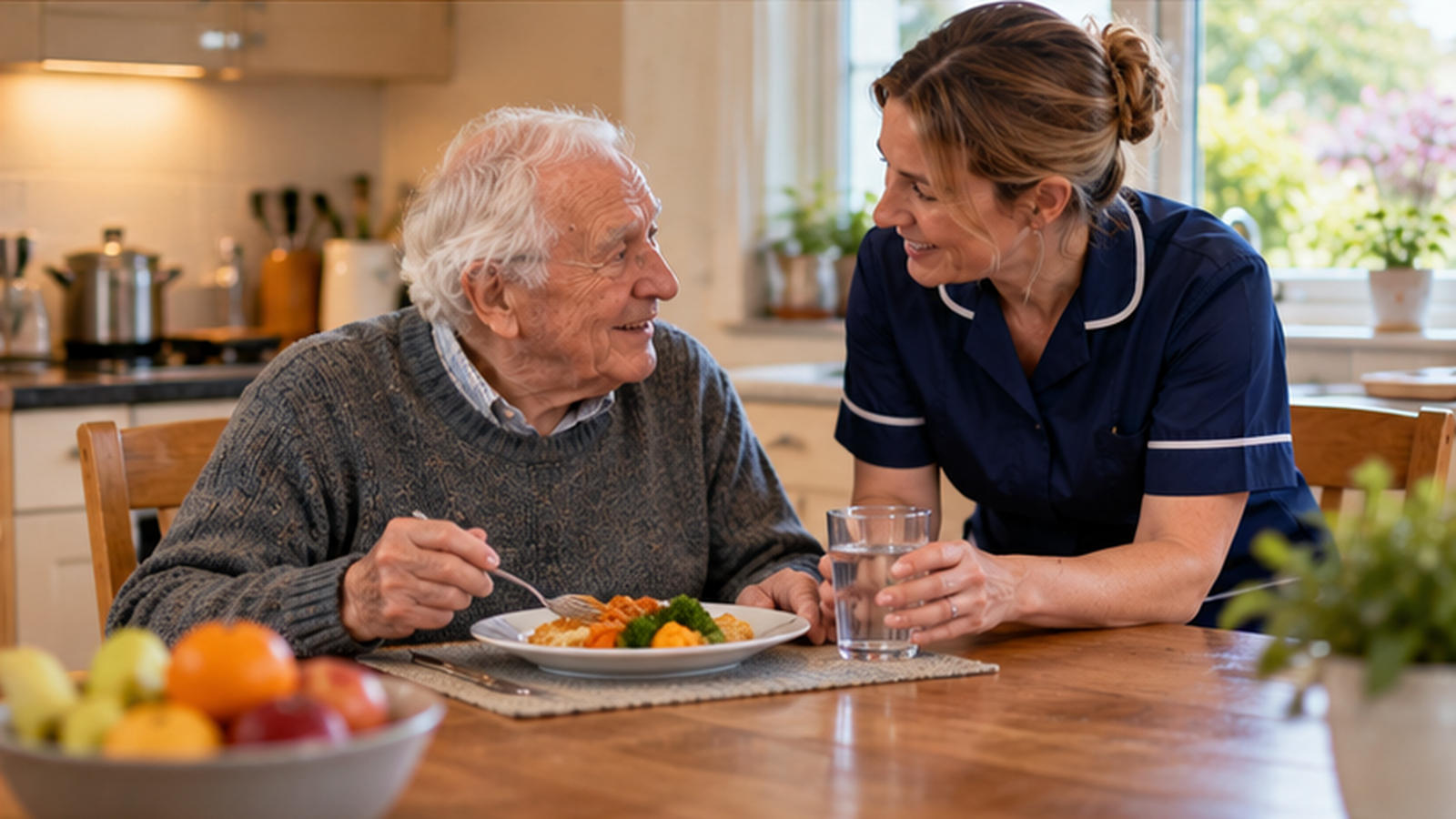
- Offer drinks throughout the day. A cup with breakfast, another during a visit and drinks between meals can create a familiar routine.
- Ask what they actually enjoy. Water is useful, but milk, tea, coffee and other suitable drinks also contribute to everyday fluid intake. The person's preferences matter.
- Keep drinks within reach. An easy-to-hold cup, a lightweight jug or an accessible bedside table may help someone drink independently.
- Include foods containing fluid. Soup, yoghurt and fruits with a high water content can help as part of normal eating.
- Notice practical barriers. Poor mobility, fear of incontinence, difficulty opening bottles or trouble swallowing may stop someone drinking enough.
- Adapt to medical advice. People with some heart or kidney conditions may have individual fluid limits. Do not apply a generic drinking target to everyone.
If an older person needs assistance with preparing drinks and meals, families in Perth & Kinross can ask Zento about its meal preparation and nutrition support, subject to the service being suitable and available locally. Where daily tasks such as eating and drinking require hands-on assistance, information about personal care at home may also be relevant.
Frequently Asked Questions
Can Elderly People Become Dehydrated Without Feeling Thirsty?
Yes. Thirst can be less noticeable in older age, so a person may not ask for a drink even when they need more fluid. Regularly offering suitable drinks can help, but thirst and other individual symptoms are not reliable diagnostic tests. Seek advice if there are concerning changes in their health.
Does Tea or Coffee Count Towards Fluid Intake?
Yes. Tea and coffee contribute to routine fluid intake, as do milk and other drinks. Water and unsweetened options are sensible everyday choices. During an illness involving vomiting or diarrhoea, advice may differ, and a pharmacist or clinician can recommend suitable rehydration options.
How Much Water Should an Elderly Person Drink Each Day?
Fluid needs depend on health, medicines, activity, weather and any prescribed restrictions. If you are concerned that someone drinks very little, ask their GP, nurse or dietitian for advice rather than setting a target without understanding their medical needs.
Can Medicines Increase the Risk of Dehydration?
Yes. Some medicines, including diuretics that increase urine production, may contribute to fluid loss. Illness and other medical conditions also affect hydration. Never stop or alter prescribed medicines without professional advice. Ask a pharmacist or prescriber if you are worried about side effects or drinking needs.

Baalaj Khawaja, RGN is a Registered Nurse with experience in cardiothoracic surgery, intensive care, care home management, and dementia care. He is passionate about providing compassionate, person-centred care and shares practical knowledge to support older adults and individuals living with dementia.